Settlement is the moment a trade is completed and the transfer of securities and cash becomes final. Public markets spent years compressing it, while most private operations never built the equivalent.
Ask a fund administrator what settlement means and you will likely get a precise answer, because in public markets the word is load-bearing.
Settlement is the completion of a trade: the securities and cash are transferred, and the obligations are discharged. The SEC frames it aptly: the official transfer of the securities to the buyer and the cash to the seller.
Until that point, the trade has been agreed, but it has not been completed.
And a promise carries a cost. The gap between agreeing a trade and settling it is a window where something can still go wrong: counterparty risk, margin posted against unsettled positions, capital that cannot be put to work elsewhere.
Shrink that window and you shrink the risk that exists inside the window. That is why institutions treat settlement as a discipline, not a back-office detail.
Here is the argument this piece makes, in three steps:
- Public markets built explicit settlement infrastructure because the cost of leaving ownership and cash unresolved was visible and priced.
- Many private operations leave comparable ownership changes to reconciliation, because that cost is spread across desks and never added up.
- That gap is now addressable at the ownership layer, with or without a token.
The Window Everyone Has Been Trying to Close
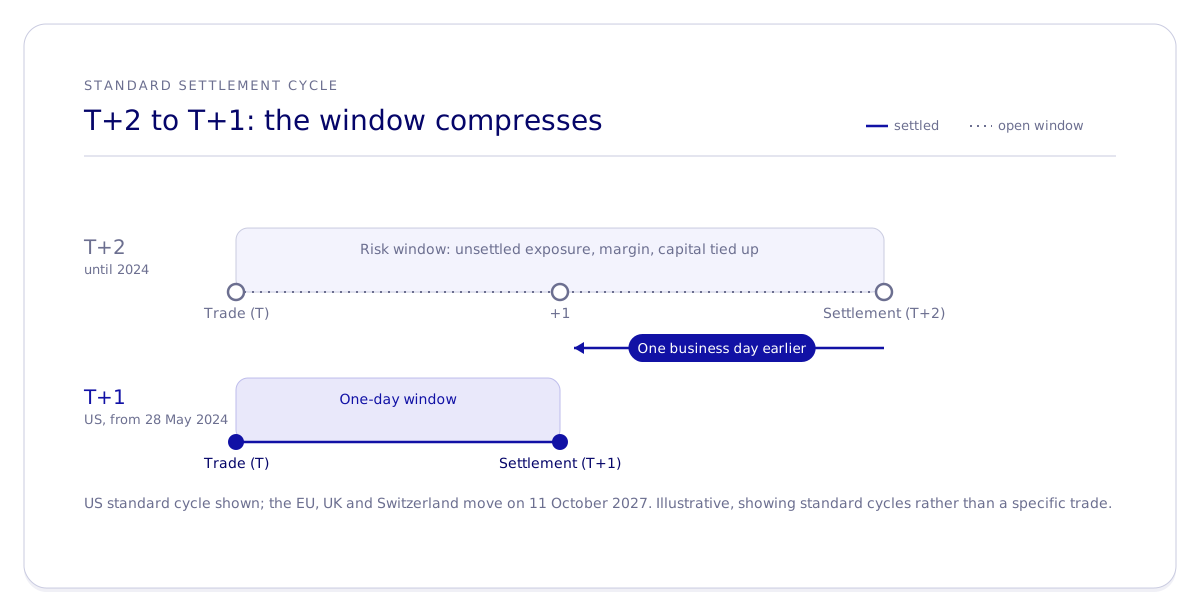
In May 2024, the US shortened its standard settlement cycle from two business days after a trade to one. T+2 became T+1.
The SEC's stated goal was to cut the credit, market and liquidity risk carried in unsettled trades. Its chair made the case in six words: time is money and time is risk.
The move is spreading across Europe. The EU has now set the same change into law, the UK and Switzerland are aligned on the date, 11 October 2027, and the first regulatory milestone lands in December 2026 for the allocation and confirmation steps that feed it.
Now look at what had to change to make T+1 work.
The settlement step itself was already highly automated. The pressure landed on everything before it: allocation, confirmation and affirmation, the work of agreeing a trade's details so it can settle cleanly.
In a two-day window, that agreement could be finished the next morning. In a one-day window, it has to be right on trade date.
The industry felt it at once. Going into T+1, SIFMA, the ICI and DTCC reported that same-day affirmation jumped from 73% of transactions at the end of January 2024 to nearly 95% by the trade-date cutoff once the cycle went live.
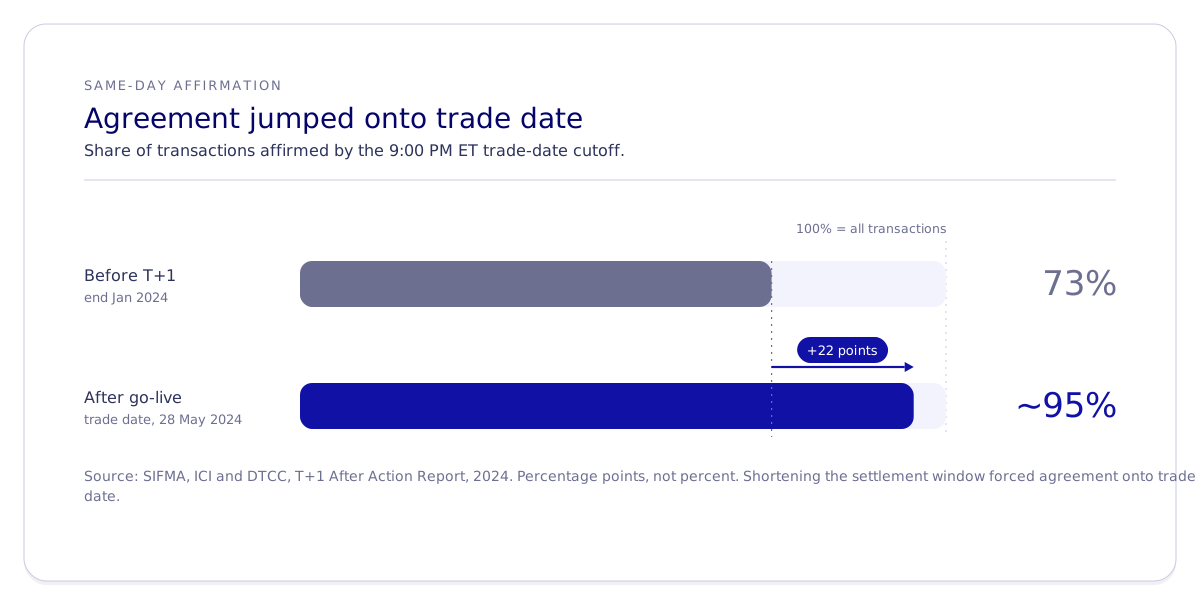
The reform was sold as a settlement change. The work it demanded was reconciliation. Shortening the window did not make settlement faster so much as it pulled agreement to the moment of the trade.
That is the line you should hold onto: settlement discipline, in practice, is reconciliation discipline with a deadline attached.
Private Markets Never Built the Equivalent
Now bring it to your operation.
A private fund interest does not trade on an exchange, and there is no standardised, market-wide settlement infrastructure for it the way there is for listed securities. Individual deals can and do use settlement agents, custodians, escrow and payment-versus-delivery arrangements. What is missing is the shared machinery, and the deadline that comes with it.
So be careful with the analogy, because it is easy to misuse and exaggerate.
Private markets do not always have settlement in the public-markets sense. What they have is the problem settlement was built to solve: making an ownership change final, recorded and agreed across the systems that depend on it. Call it settlement at the ownership layer, and think of it as an analogy, not a claim that a capital call is a securities settlement.
That problem shows up constantly.
A subscription completes. A commitment is called. A position transfers. A distribution pays. Each one changes who holds what. And each one has to be agreed across the register, the administrator's book of record, the accounting system and the bank before anyone can rely on it.
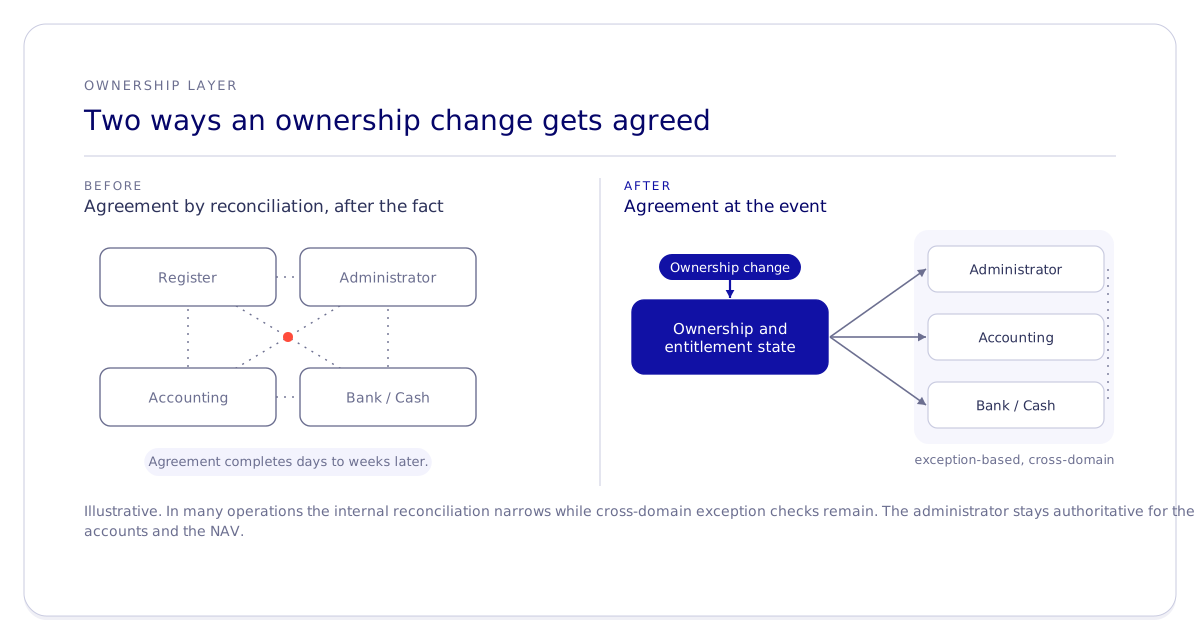
In public markets, that agreement is forced to the point of the trade. In many private operations, it happens later: the register is updated when someone gets to it, the administrator's record is reconciled at month end, the evidence is reassembled at audit.
A fund runs on several domains of authority, not one. The administrator is authoritative for the accounts and the NAV. The bank is authoritative for cash. The valuation process owns valuations, the governing documents own the terms. The ownership and entitlement state sits underneath all of them: who holds which position, in what structure, with which rights. That is the layer most often left to reconciliation rather than governed at the point of change, and it is the layer this piece is about.
A reconciliation is two systems that were each certain, now meeting. The longer the delay between an ownership change and the moment those systems are made to agree, the more room there is for the register and the administrator's record to drift, for a distribution to run against a stale position, for an audit to surface a chain that was followed but never recorded as one.
None of it is dramatic. That is exactly why it survives every review it faces, and why the cost lands as capacity spent keeping systems aligned rather than as a settlement line anyone tracks.
A Dramatic Half and a Subtle, But Powerful Half
Settlement innovation gets oversold, so separate the two halves.
The dramatic half collapses the asset leg and the cash leg into a single simultaneous step, atomic settlement, so neither completes without the other. That is a worthwhile thing on instruments that trade continuously and settle constantly. Most private fund interests do not trade that way, so for many funds this is a minor line, not the headline.
The useful half is more subtle: finality, and agreement at the moment of the event rather than reconstructed later.
You do not need continuous trading to adopt it. You do not need a token either. Whether the ownership record sits on a ledger is a configurable choice, and anyone offering one settlement rail as the only correct one is describing a preference.
One guardrail, because it heads off the obvious objection. Authoritative is not the same as real time. Private markets run on deliberate cycles: valuations strike at set points, NAVs close, calls and distributions carry dates and approvals. A quarterly fund does not need T+0. It can still gain from an ownership state that is governed at the point of change instead of rebuilt afterwards.
What "Settled" Would Mean At The Ownership Layer
Borrow three properties from how public markets treat a settled trade, and apply them to an ownership change in your fund.
- Final: the ownership change is complete, with one record authoritative for it and the others deferring to it.
- Agreed at the moment: the systems that depend on it resolve against it then, not at the next reconciliation.
- Evidenced: the change carries its own time-stamped record of what happened and in what order, so the trail does not have to be rebuilt at audit.
That gives you something more useful than a benchmark. It gives you a test.
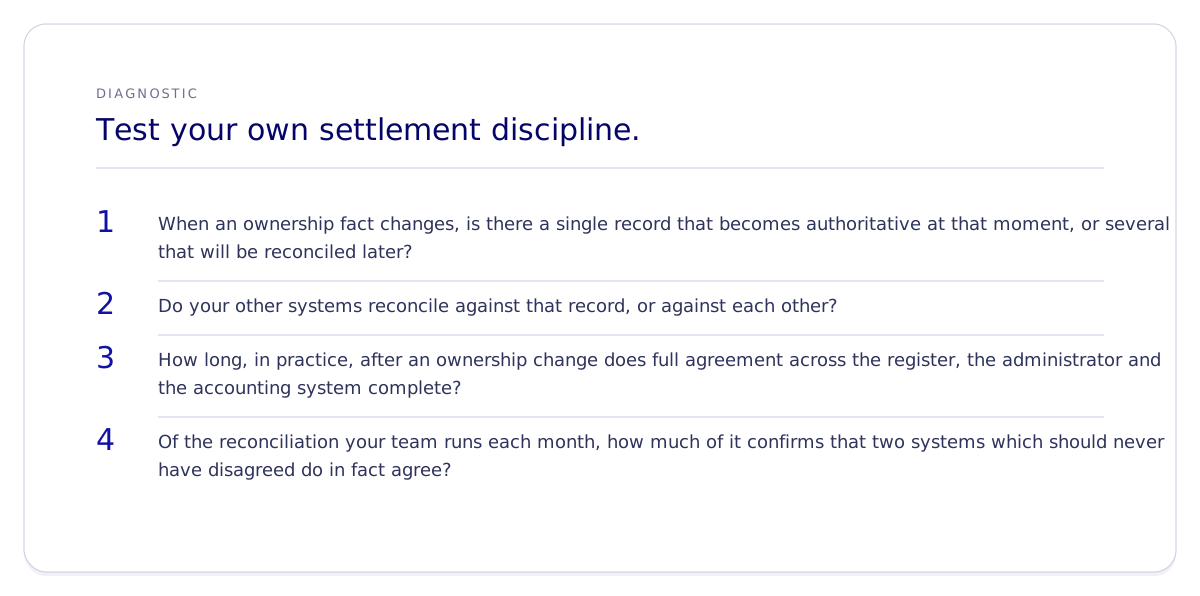
The answers will vary, and so will what should be fixed on the back of them.
An operation whose ownership record is already governed and current will find most of the gap closed. One whose ownership picture is spread across a register, an administrator, a CRM and the spreadsheets that hold the seams together will find more to gain, and a larger project to get there.
Both are good starting points. Neither conclusion holds for every fund, because no two operations settle the same way.
Settling Settlements And What That Means for You
Public markets priced the gap between an event and its record, so they built infrastructure to close it. Many private operations never priced the same gap, so they left it to reconciliation. Tokenisation, where it fits, creates the opening to make the ownership state authoritative at the point of change rather than after it.
That is where the product sits, and only there.
Tranche:source is built to hold the authoritative ownership and entitlement state: who holds which position, in what structure, with which rights, and the transactions that change it over time. It is authoritative for that layer, not a universal system of record. Tranche:route carries the state through the operation and runs the work that acts on it, so reconciliation narrows from proving two records match to confirming, by exception, that they still line up.
The administrator stays authoritative for the accounts and the NAV. The bank stays authoritative for cash. What changes is that the ownership state can become authoritative when the event is completed, rather than being reconstructed through reconciliation later.
Public markets decided the gap between an event and its record was too expensive to leave open, and spent years closing it.
The same gap sits in many private operations, unpriced. Settlement gives public markets a word for closing it. Private markets can apply the same discipline at the ownership layer. How much closing yours needs depends on where it starts.