Your operations team is bigger than it was two years ago, but maybe your fund count isn't.
You already measure parts of that gap. What you have probably never done is add them up.
Vocabulary Borrowed from Engineering
Software teams have carried this since 1992. Technical debt: somebody takes a shortcut to hit a deadline, the shortcut works, so it stays. Three years later a one-day change takes a fortnight, because six other things were built on top of it.
The move that was important at the time was consolidation. Engineering took a hundred scattered annoyances, gave them one name and one rough number, and put a single line in the board pack. After that, a CTO could say "here is what our shortcuts cost us per release," and the business could decide what to do about it. Nice, clean, measurable.
Your industry already names the symptoms. Operational due diligence puts back-office risk on a formal checklist. The "Excel tax" describes the analyst hours lost to data manipulation. Key-person risk sits on every DDQ. These are real, and plenty of credit funds, buyout managers and family offices track them.
What tends to be missing is the consolidation. The Excel tax is watched by operations, error penalties land on finance, ODD readiness becomes the CFO's problem in the eight weeks before a raise. Each is handled as its own hygiene item, and the single cause underneath them goes unpriced.
Operational debt is that single cause: the accumulated cost of every process, workaround and manual handoff that made sense at the time, and now taxes everything the business does.
The subscription documents retyped from PDF into the CRM by hand. The capital call notices built line by line. The portfolio metrics collected from a dozen companies in disjointed spreadsheets, then consolidated by someone every quarter. Each was a reasonable answer to yesterday's problem, which is what makes it debt.
Why Operational Debt is the Harder of the Two
The comparison is useful, but it lets operational debt off too easily. It behaves worse than technical debt in three ways, and each one explains why it sits unaddressed for years.
1. It Has No Owner
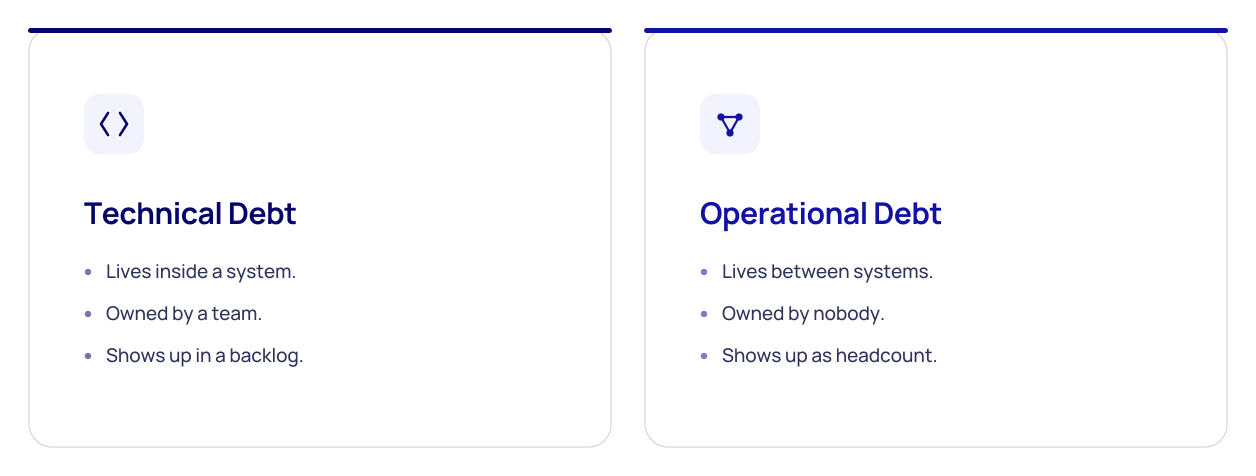
Technical debt lives inside a system, and systems have teams. Somebody's job is to notice that the codebase is getting harder to work in.
Operational debt lives in the seams between systems: between your unit register and your fund administrator, between onboarding and compliance, between what the CRM believes about an investor and what the register records. Nobody is accountable for a seam, which is why nobody has ever raised a ticket for one.
2. Its Ledger is Scattered
A CTO can point at one backlog. It has a length, and the length is an argument.
Operational debt gets measured too, but in fragments that never get summed. Operations watches the Excel tax. Finance logs the error penalties. The CFO models ODD readiness before a raise. Three numbers, three desks, and for the most part, no line anywhere that adds them into one.
Part of the reason is how managers service the underlying problem. They hire. One more analyst on the operations team. One more person for investor services during the raise. Another at year end, after reporting nearly went sideways. Every one of those lands on the P&L as investment in growth. Some of them are. A proportion is interest payment: capacity bought to close the gap between systems, producing nothing the business could sell to an investor. That spend is real, it recurs every year, and it sits under a heading that reads like expansion.
3. You Don't Set the Repayment Date
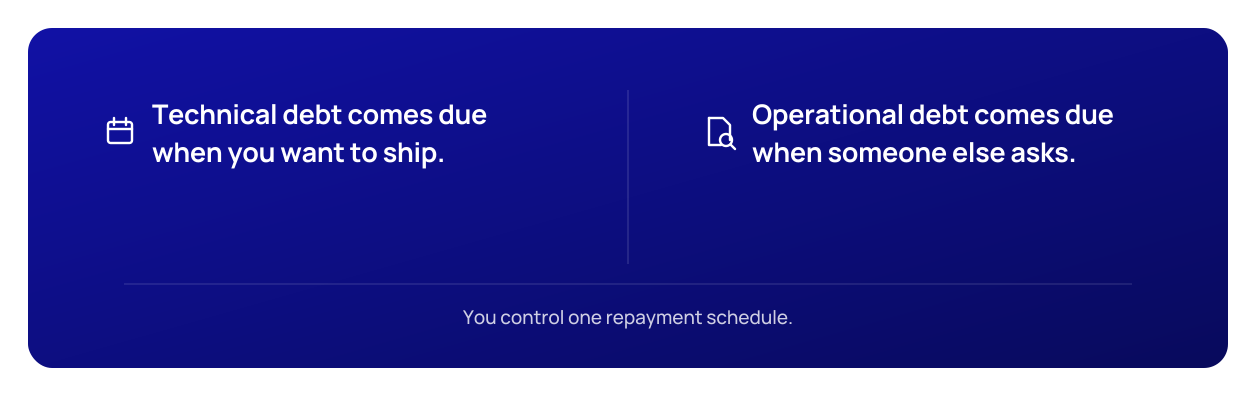
Technical debt comes due when you want to ship something. Your timeline, your terms.
Operational debt comes due when someone else asks. An audit, a regulator's information request, or the moment a large institutional allocator runs operational due diligence before committing. A pension fund or sovereign wealth investor audits your back office before the money moves, and a workflow that leans on one analyst's Excel macro or a chain of manual emails reads to them as operational risk. That single finding can cost a multi-million dollar allocation. The debt surfaces when your team is least able to absorb it and most exposed if it can't.
What Operational Debt Looks Like on a Tuesday
Strip away the framing and operational debt is mundane, boring, unsexy. The examples below come from a credit fund, a multi-family office and a real assets platform. The mechanics are identical in each.
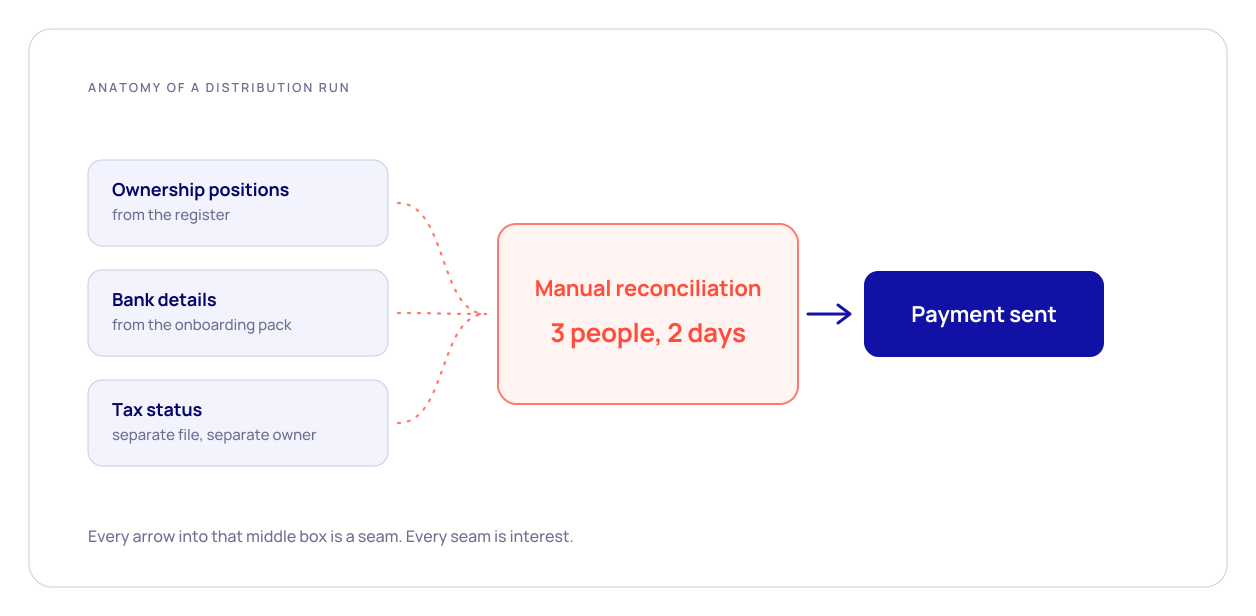
The distribution run. Ownership positions come from the register. Bank details come from the onboarding pack. Tax status sits in a third file, maintained by a different person, last confirmed at a different time. Each source is accurate within its own context, and none of them are aligned. So the run gets checked, rechecked, then checked again by someone senior, because everyone involved knows that being wrong about where money goes is not a recoverable error. Three people and two days to move money the fund already knew it owed.
The trustee change. (Family office, wealth platform, anyone onboarding through structures.) An investor restructures, a trustee is replaced, a beneficial owner is added. The register holds the legal entity, which is correct. Establishing who sits behind that entity means returning to the application pack, the certified documents and an email chain from 2023, and rebuilding a picture that was captured once and never maintained. The information was collected. It was never held in a form that survives change.
Month end. Internal records and the administrator's records are compared line by line. Discrepancies are investigated, explained and resolved. The process is well run and the answer is almost always benign. It also consumes several days of skilled attention every month, forever, to produce a single output: confirmation that two systems which should have agreed do in fact agree.
Audit season. Evidence gets reconstructed. Someone works backwards through source documents to demonstrate a chain of ownership and approval the firm followed but never recorded as one continuous trail. The audit is passed. The cost of passing is a fortnight of team capacity and a level of background stress everyone has agreed to treat as normal.
None of those are crises. Nothing breaks, no system goes down, and that is the entire problem. Operational debt presents as competent people working very hard, which is why it survives every review it ever faces.
Why the Debt Compounds
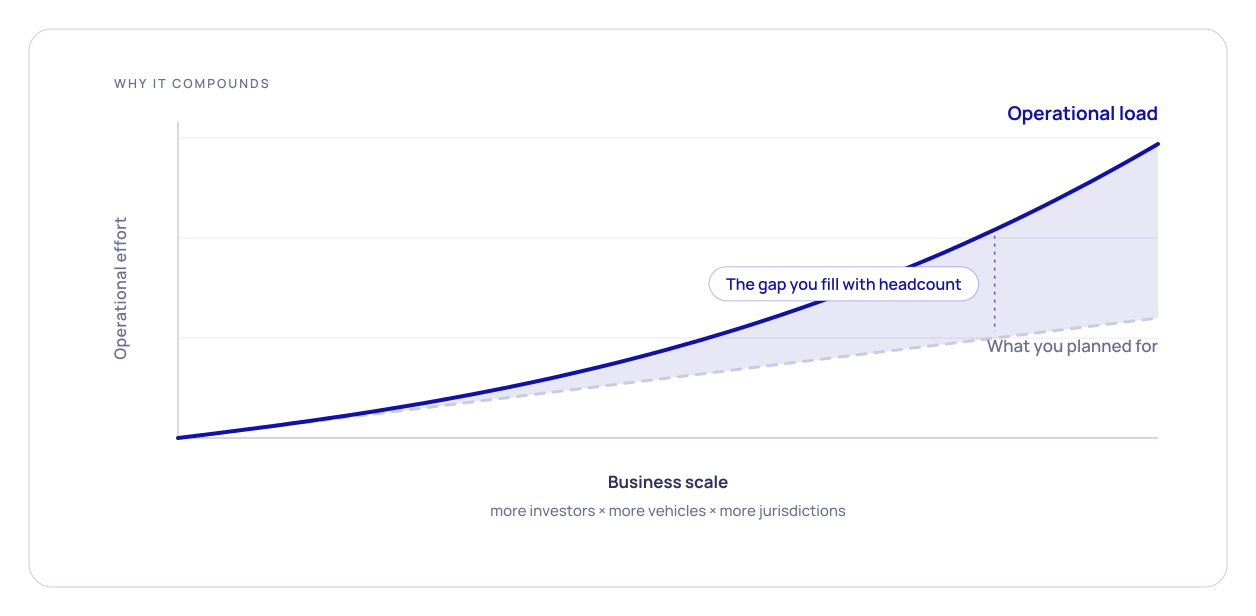
Technical debt grows in step with the size of the codebase. Operational debt grows on three axes at once.
More investors means more onboarding, servicing and communication volume. More vehicles, a second credit fund, an evergreen structure, a co-invest SPV, means more variation in fee logic, reporting obligations and administration. More jurisdictions, the Singapore feeder or the first offshore LP, means additional regulatory requirements and evidence standards, applied backwards across everything already in place.
Those three multiply against each other. A process that works across one hundred investors, in one vehicle, in one jurisdiction is harder at a thousand investors across three vehicles in two jurisdictions by some multiple of all three, and the multiple stays invisible until you are inside it.
Which is why adding people treats the symptom and leaves the principal untouched. More people absorb more manual coordination, right up until they can't, and the cost of that capacity grows on the same curve as the problem it was hired to solve.
Consolidating it Into One Number
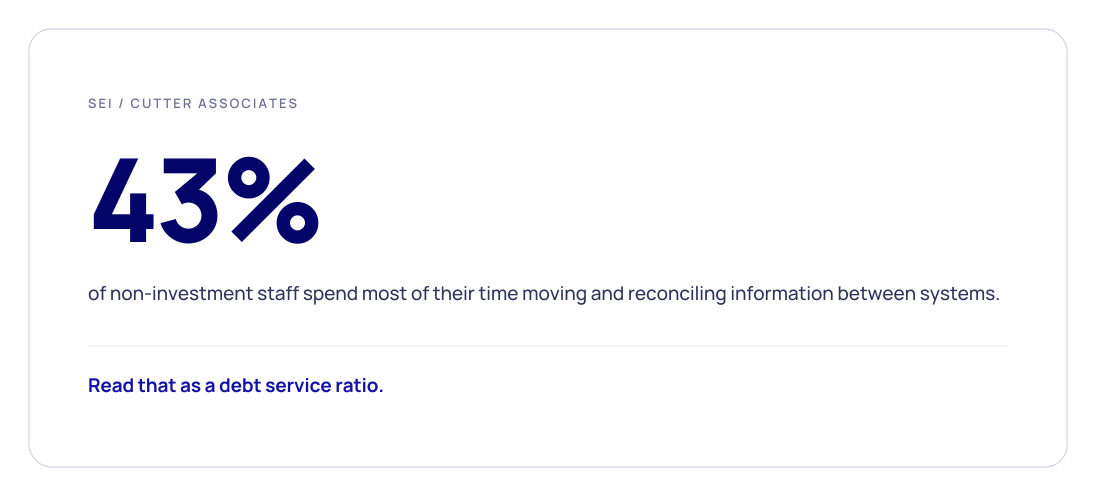
Research from SEI and Cutter Associates in 2025 found that 43% of non-investment staff are tied up replicating work their fund administrators have already done rather than doing higher-value work.
Read that as a debt service ratio. For almost half the non-investment team, more than half of every week goes to getting into a position where the work can begin.
How to Measure Your Operational Debt
You may already track some of these numbers in isolation. The exercise below pulls them into a single figure - it takes one afternoon and zero consultants.
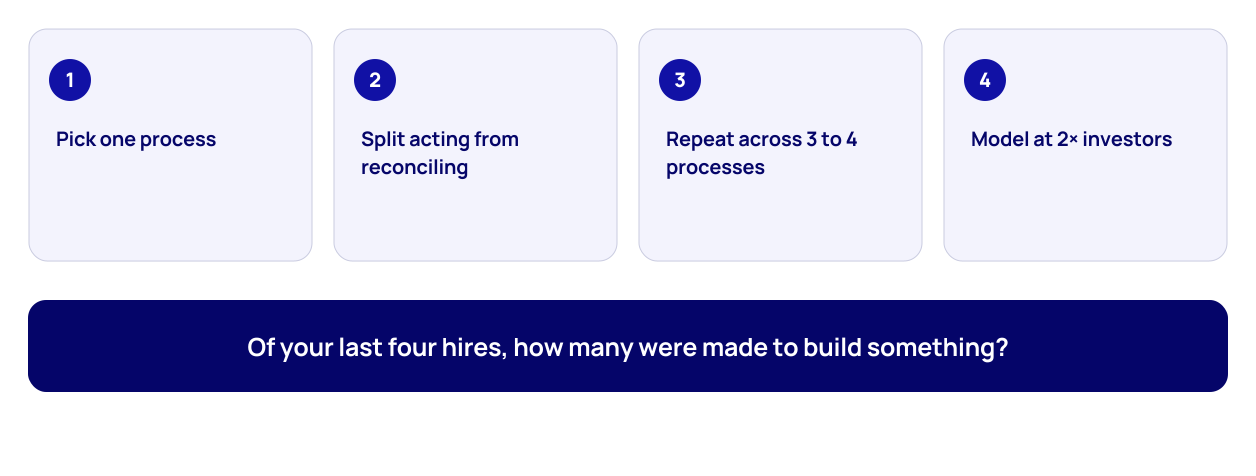
1. Pick one process. A distribution run, a quarterly report, a capital call, doesn’t matter which. Choose one that happens often enough that the team can describe it from memory.
2. Split acting from reconciling. Every hour that process consumes goes into one of two buckets. Time spent acting into one bucket, and time spent moving, checking or reconciling information in order to be allowed to act into the other bucket. That second bucket is your interest payment, and it is usually larger than the team expects when they see it written down.
3. Repeat across three or four core processes. Now you have a defensible figure, expressed in FTE, for what the current architecture costs to run each year. It is a number you can take to an IC or a board without qualifying it. You could even do it a few times across different periods to get an average.
4. Model it at double the investor count. Growth in the acting bucket tracks the investor count at parity. Growth in the reconciling bucket compounds, and that gap is the real forecast.
The natural follow-up question to this exercise is less comfortable and more useful: of your last four hires, how many were made to build something, and how many were made to keep something aligned?
Paying Down the Principal
It requires two structural changes, not ten.
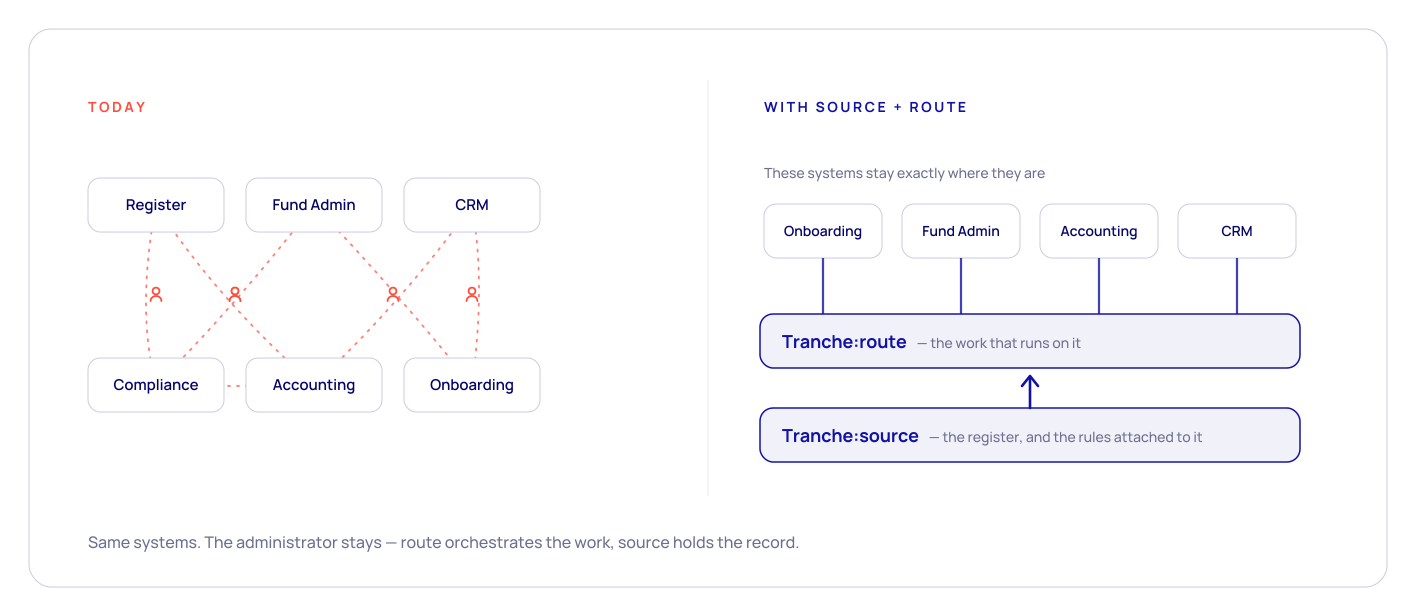
The first is a single authoritative record of who holds what, in what structure, and what they are entitled to. One that stays current on its own, and that other systems read from. That is what Tranche:source is built to be: an immutable, API-first registry that feeds the rest of the operation instead of sitting beside it as one more version of the truth. Reconciliation stops being a task, because there is nothing left to reconcile against.
The second is a layer governing how work moves between systems and people, so approvals, compliance checks and reporting run in sequence without someone chasing each step. That is Tranche:route, the orchestration layer that turns seams into governed pathways.
Neither requires replacing what already functions. The administrator stays. The accounting platform stays. What changes is that the coordination between them stops being performed by people.
The Point
Every fund, platform and family office carries operational debt, and there is no serious argument for trying to reach zero. The argument is for knowing the balance.
Managers who can name what their infrastructure costs them each year get to choose when and how they pay it down. Managers who can't will find out during an audit, a raise or an LP's operational due diligence, and at that point the terms belong to somebody else.