A register looks like a static list. The work is everything that changes it.
The register is the record of who holds what: which investor owns which units or shares, in which class, under which terms, with which entitlements. On a quiet day it looks like a list, and a list is easy to keep. A spreadsheet can hold it. So can an administrator's platform, a fund accounting system updated by hand, or a set of documents typed into a database. All of those are ways to maintain a register. What separates them is whether the record stays correct, single and provable as it changes, not whether it happens to run on software.
When we say, ‘manual’, this piece means maintained by hand, whatever the tool. A spreadsheet is the obvious case, but a register amended by hand inside an administrator's system is manual too. The tool matters less than how changes are made and controlled. That is the comparison a fund administrator should judge against.
What Keeping A Register Involves
The record is the easy part. Keeping it current through change is the job.
A register at rest is simple, but a register in motion is a different story. The difficulty comes from change - regardless of size: a thousand holdings that never move are easier to keep than a hundred that change every week. And a register changes constantly. A subscription adds a holder. A redemption removes units. A secondary transfer moves them between holders. A new class or series splits the structure. A corporate action re-bases everyone at once. A change in the entity behind a holding rewrites who sits on the record. Each event has to land accurately, in order, and consistently with every other place the register is relied on.
Every way of keeping a register produces a correct list on a calm day. But they diverge in capability and usefulness depending on how well the record survives change, how many competing copies it spawns, and whether you can prove how it reached its current state.
Why Keeping It By Hand Can Sometimes Be Good
Hand-maintenance earns its place at small, stable scale. Start there.
Maintaining a register by hand has real advantages. It costs almost nothing to start and needs no procurement. It runs on tools and processes people already know, so there's no training curve and little to depend on. It's flexible: an unusual holding, a one-off adjustment, a bespoke arrangement can be handled on the spot. For a fund with a small, stable holder base, few change events and a simple structure, a careful person maintaining the record can keep it accurate for years. At that scale, a governed system may buy very little - or in other words, it would be cracking a walnut with a sledgehammer.
So hand-maintenance is a reasonable answer to a small problem, not a lapse in discipline. The trouble starts when the problem stops being small.
Where Hand-Maintenance Starts to Cost
Four pressures, and the first one is the one people underrate.
Maintaining a register by hand runs into four problems as the record gets busier. They tend to arrive in this order of importance, and the first is the one that gets underrated.
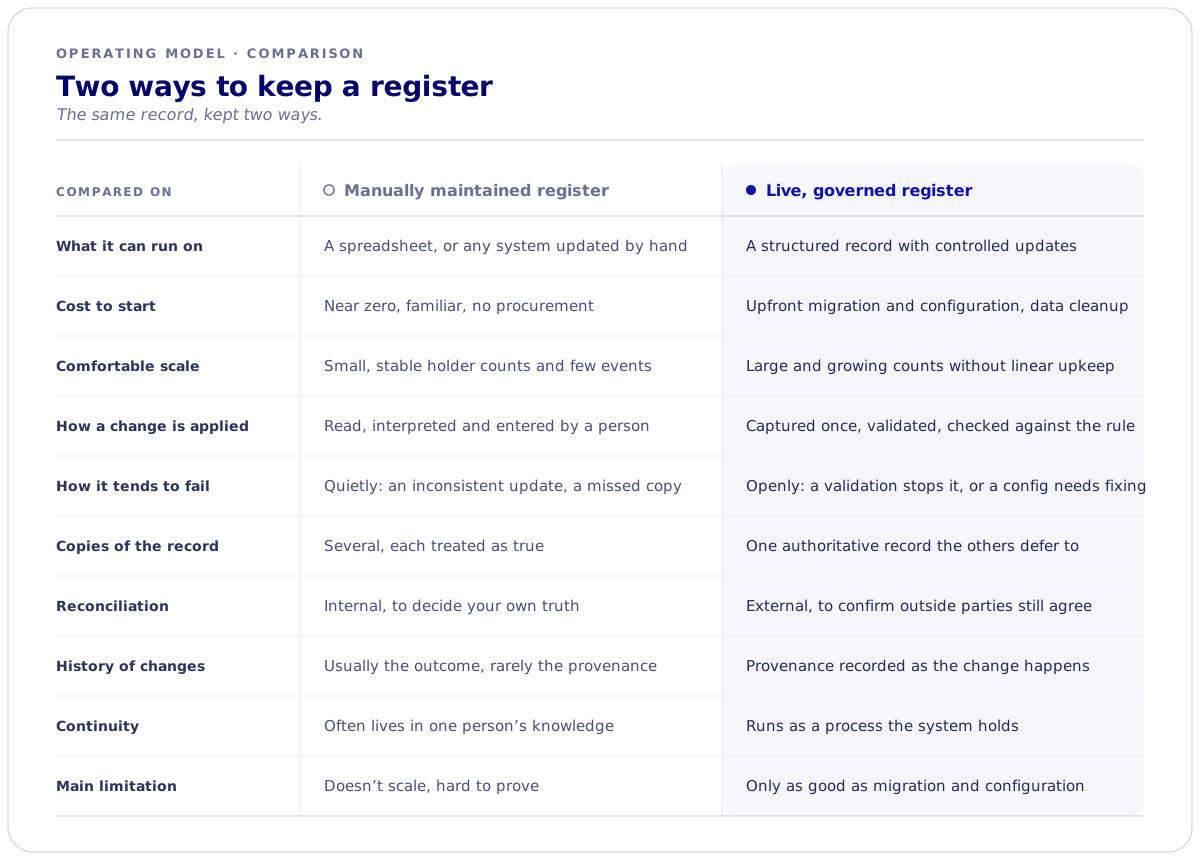
1. Controlled change: This is the core of it. Every event has to be turned into a correct change to the record: the right rule applied, the right entity selected, the right approval obtained, the right entitlements recalculated. Done by hand, nothing enforces any of that. A transfer is read, interpreted and typed in, and whether it was applied correctly depends on the person and the day. A register rarely fails by crashing. The failure looks like an inconsistent update, a missed copy, or a step skipped on one change and not another, and the record can be wrong while looking completely intact. That is what makes it hard to catch.
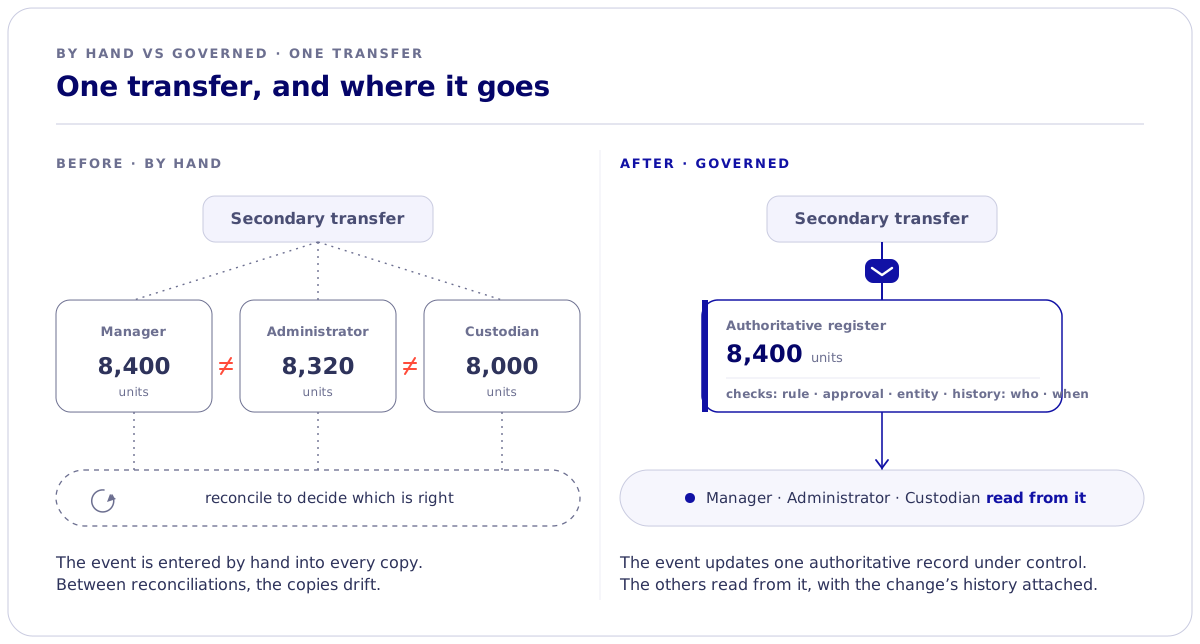
2. Reconciliation: Once the register exists in more than one place, and it almost always does, the manager's view, the administrator's, sometimes the custodian's, keeping them aligned becomes a standing task. Internal reconciliation is when your own copies disagree and you reconcile to decide which is right. External reconciliation is when your authoritative record is checked against an independent party to confirm they still agree. The first is the expensive one, because it means you're using reconciliation to establish your own truth rather than to confirm it. Operational Debt measures what that recurring work costs, and Building a Single Source of Truth covers why connecting copies exposes the disagreement without settling it. The register is where both bite hardest, since so much resolves against it.
3. Evidence: A record of the outcome is not the same as a record of how the outcome was reached. A line that reads "transfer: done" preserves the result, not who authorised it, against which rule, using what data, or when. That gap is invisible most of the time but can be very expensive under scrutiny. Our piece on why every workflow should produce evidence draws the distinction: a change that produces its own provenance as it happens is evidence; a change written up afterward, or not at all, has to be reconstructed. Hand-maintenance tends to preserve the outcome and lose the provenance.
4. Human dependency: When the record is kept by hand, the knowledge of how to keep it lives with a person: which version is current, which arrangement has special treatment, which transfer needs a call to the administrator, which exception gets handled a particular way. That sits nowhere the institution can read. When that person is away for a week, upkeep slows or degrades. When they leave, part of the operating model leaves with them. A register that depends on one person's memory is carrying key-person risk on the firm's most important book.
None of these will bring end of days style drama individually, but together they set a ceiling on how far hand-maintenance scales before it becomes a risk you can't see.
What a Governed Register Can and Can’t Change
A governed record removes some problems and hands you new responsibilities.
The alternative to hand-maintenance isn't simply "digital," because a spreadsheet, a PDF and an administrator's system are all digital already. If any of them is still updated by hand, or is one of several copies each treated as true, it carries the same four problems. The distinction that needs to be focused on is governance: a structured record with controlled updates, validation at the point of change, a clear authority, and a history you can read back.
In a governed register, an event is captured once and applied as a controlled change: validated as it's entered, checked against the rule that applies, recorded with who or what authorised it and when. There's one authoritative version of the record, and other systems read from it rather than each maintaining a rival version they believe is true.
Set against the four problems above, the change is specific. Controlled change means a transfer can't be applied without the checks that make it correct. The authoritative record means internal reconciliation, deciding which of your own copies is right, largely falls away, because there's one the others defer to. The history means a scrutiny moment becomes retrieval rather than investigation. And the process lives in the system, so it survives the week someone is away.
Now the honest part, because a governed register is not magic and shouldn't be sold as one. It carries its own costs and limits.
- Migration is real work. Moving an existing register into a governed system means cleaning data that has drifted for years, and that cleanup is usually the hard part of the project.
- It inherits the quality of what you feed it. A governed record built on bad source data is just wrong faster. Validation catches a malformed entry, not a wrong instruction entered correctly.
- It has to be configured to your structure. Fee logic, class rights, transfer rules and entitlements differ by fund, and the record is only as right as that configuration.
- It changes where the labour goes rather than removing it. You still need people for exceptions, approvals, complex transfers, investigations and confirming alignment with outside parties. What falls is the linear growth in manual upkeep, not the headcount itself.
- It doesn't end reconciliation. Independent parties still hold their own records, so confirming your register agrees with a custodian or a counterparty remains. What changes is that this becomes a periodic external check against an already-authoritative record, rather than the daily act of deciding which of your own copies to believe.
That last pair matters for anyone who has read the rest of this blog. A governed register reduces reconciliation and relocates labour but it does not abolish either.
A Hypothetical Case Study
Hypothetical, not a client and not measured results. The mechanics are the point.
The scenario below is hypothetical. It shows how the pressures play out, not what any real fund has achieved. Treat the figures as directional.
Start with the fund. A fund administrator keeps the unitholder register for a growing wholesale fund. Over about eighteen months it grows from a couple of hundred holders to close to a thousand, and adds a second unit class.
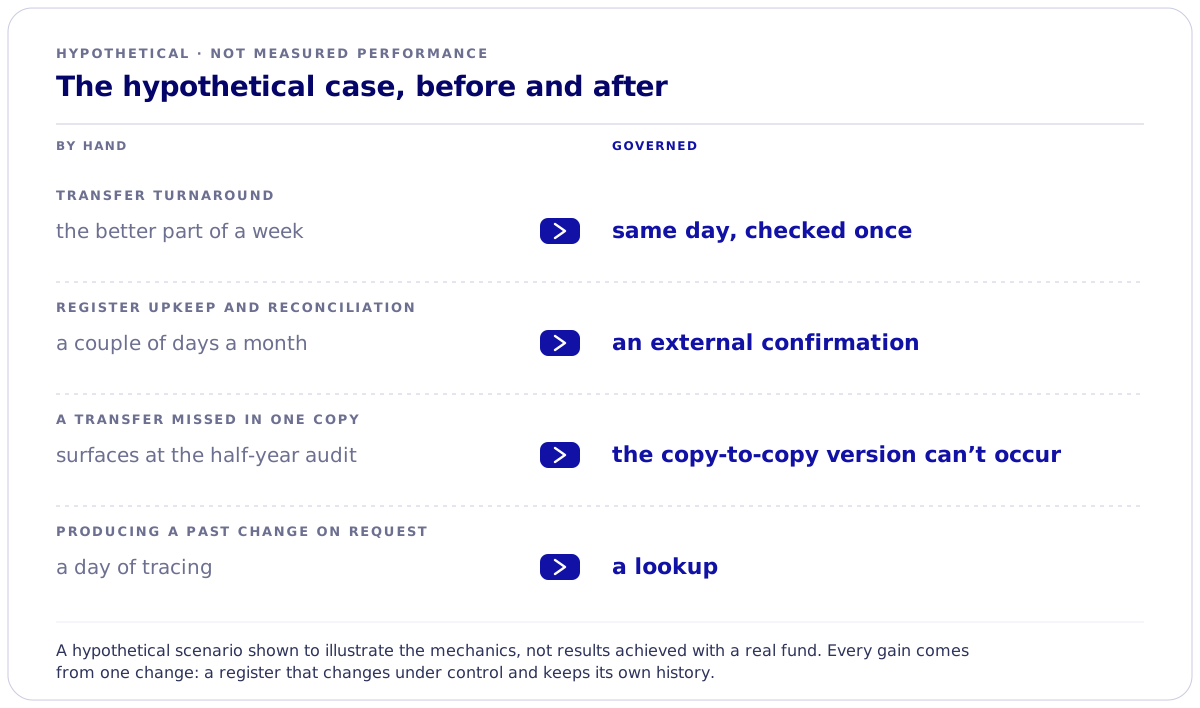
Here is how it runs by hand: The register is a master file, copied to the manager. Both get reconciled at each month end. One secondary transfer touches several files and more than one person. From instruction to a confirmed update, it takes the better part of a week. Then a run of transfers arrives at the same time as the new class. The backlog builds. One transfer goes into the master but not the manager's copy. Nobody notices until the half-year audit, where tracing and explaining it costs a day. Month-end reconciliation runs to a couple of days. Nothing breaks. It is just slow, and the slack keeps shrinking as the holder count climbs.
Here is the same work on a governed register: The transfer is entered once. It is validated, checked against the rule, and applied to the one authoritative record, with the approver and the time attached. The new class is a single configuration change across every affected holding, not a manual pass through the file. The missed-copy problem cannot happen, because there is one record to update and the rest read from it. The transfer can still go wrong in other ways: a wrong entity, a bad instruction, a misconfiguration. The checks still matter. What goes away is the failure caused by keeping several copies in step by hand. Month-end changes from reconciling the register against itself to confirming it against outside parties. The audit request that took a day now takes a lookup.
The hours will differ everywhere, so don't go to the bank with them. Every gain comes from the same change: the register stops being several copies kept in step by hand, and becomes one record that changes under control and keeps its own history.
How to Tell Which One You Should Be Running
Four questions, answerable from your own week.
You don't need a framework to decide this. Look at your own register against the things that strain it.
- How often does it change? A register that moves a few times a year is a different problem from one taking regular subscriptions, redemptions and transfers. Change frequency, more than holder count alone, is what hand-maintenance struggles with.
- How many copies of it exist, each kept current by hand? Count the separate places the register is held and maintained. Each one is a reconciliation you're paying for and a chance for the copies to drift apart.
- Could you prove a change from six months ago inside the meeting, or would you reconstruct it? If the honest answer is reconstruct, your register is recording outcomes without their provenance, and scrutiny will eventually find that out.
- What happens the week the person who maintains it is away? If upkeep pauses or degrades, the record depends on a person rather than a process, and that is key-person risk sitting on your most important book.
If your register changes rarely, lives in one place, can be explained on the spot, and doesn't depend on one person's memory, keeping it by hand may be entirely defensible, and you can stop reading. As those answers change, the case for a governed register stops being about efficiency and becomes about a risk you can no longer see.
Where This Leaves You
The register is the record everything else resolves against. Keep it accordingly.
Almost every other operation in a fund resolves against the register: distributions, entitlements, reporting, transfers, corporate actions. When the register is a set of hand-kept copies, that dependency inherits every problem above. When it's one governed record, the rest of the operation reads from something current and provable.
That's what Tranche:source is built to be: an authoritative operational record of who holds what, under which terms, with which entitlements, that stays current and that other systems read from rather than copy. How that record sits alongside a given vehicle's statutory register depends on the structure, whether a unit trust, a company, a limited partnership or a scheme, so treat it as the authoritative ownership and entitlement record rather than a claim to be the legal register in every case. Tranche:route governs the changes that reach it, so a transfer, a subscription or a class change runs as a sequenced, checked workflow that updates the record once and leaves its history behind. The administrator's role doesn't disappear in that picture. The manual coordination around the register does. And none of it depends on a particular technology underneath: a governed register can be tokenised, as other pieces here discuss, or not, and the operating benefits hold either way.
Manual register-keeping is a stage, not a failing. The end of it comes not when someone declares spreadsheets obsolete, but when the record changes often enough, exists in enough copies and faces enough scrutiny that keeping it by hand quietly becomes the riskiest thing you do. Most administrators can name, fairly precisely, where they sit on that line.