A GP is going to pitch you a "digital asset." Here is what it does, and does not, change about your ticket.
A GP is going to send you a deck with "digital assets" on the cover. Maybe this year, maybe they already have.
It will describe your fund interest as something new. A token. A digital asset. A position you can move around.
This is real. It is just not the same thing as changing the underlying investment you hold.
So just to be clear, this is the fact you should not let go of: a token changes the record of your interest before it changes the interest itself.
The rest of this piece keeps three things apart, because usually on this topic they get blurred:
- What you own. Your economic and legal interest.
- How it is represented. The systems and records that hold your position.
- What a new representation lets you do. The transfers, reporting and functionality that follow.
Get those three straight and you can read any tokenisation pitch for what it offers.
One boundary first: this is not about whether tokenisation opens the asset class to new money, or makes your stake liquid. It mostly doesn't, and we have shown why separately. This is about the record.
You Already Own It, But You Call It a Fund Interest
What you own, and how it is represented, are two different things.
Start with what you hold now.
You committed to a fund. You funded it through capital calls. You own an economic and legal interest: a right to that fund's cash flows, under the agreement you signed.
That interest is represented across several systems. The administrator has its records. The GP has its records. Your custodian has its records. Your own portfolio system holds another representation.
Each is a version of the same position. Keeping those versions in agreement is a job, and someone does it every quarter.
When they disagree, you feel it as delay, as an error, or as a number you cannot immediately be confident in. That is the cost of one position living in many representations at once.
That is the area a token first makes its impact.
What "Tokenisation" Means, Minus the Crypto
The word sounds like crypto. But like most brilliant things, if you strip the gloss off, it gets dull, mundane and beautiful in what it achieves.
The Bank for International Settlements defines tokenisation as recording a claim on an asset onto a shared, programmable platform, instead of in a private database (BIS, 2025).
So the first thing tokenisation changes is the record. Your claim is what that record represents.
Two things follow.
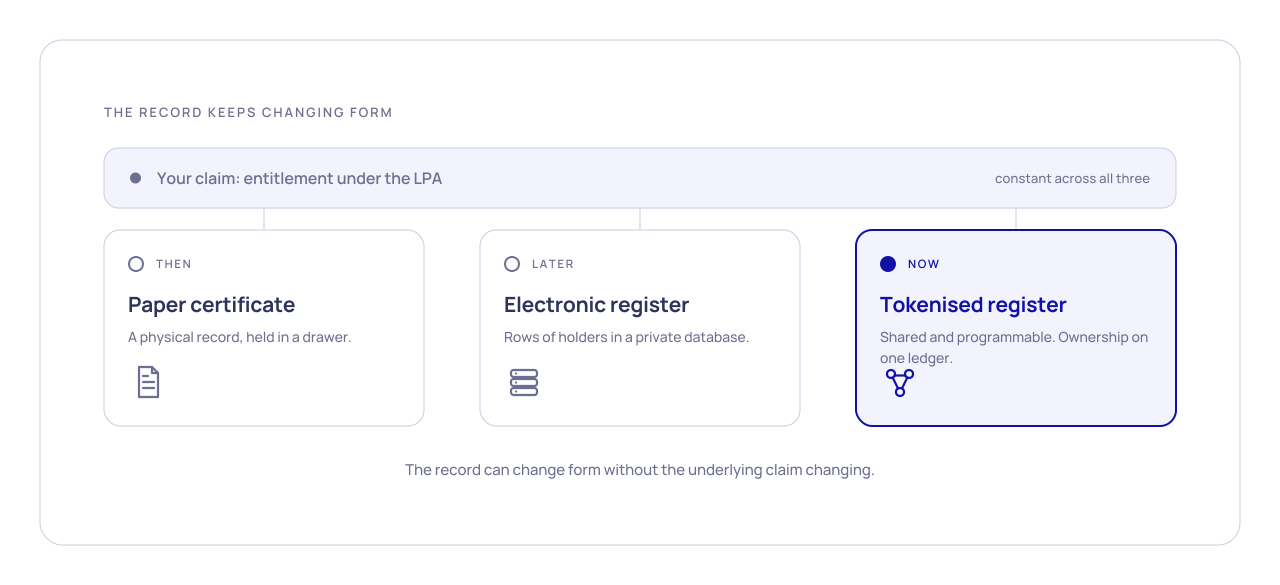
One: you have seen this move before. Share certificates used to be paper in a drawer. They went electronic decades ago, and few investors miss the paper. The BIS places tokenisation as a further step along that same line (BIS, 2025). The record can change form without the underlying claim changing.
Two: there is no single "correct" technology. The BIS says the platform may or may not run on a blockchain (BIS, 2025). When a pitch insists it has to be this chain, or this rail, that is a preference talking, not a rule.
Which Part Goes Digital First
The record moves before the asset does.
The industry has already shown which part of a fund goes digital first.
In 2023 the UK's Investment Association, working with the Treasury and the FCA, published a baseline model for tokenised funds. In that model, the unit register moves onto a shared ledger and tracks who holds what, while valuation and settlement carry on the same way as before (Investment Association, 2023).
That was the baseline, not the endpoint. In October 2025 the FCA consulted on models that go further, with final rules expected in 2026 (FCA, CP25/28).
Even so, the running order holds. The first thing that changes is how your ownership is recorded. In that baseline model, valuation stays where it is, the legal wrapper stays where it is, and your rights under it stay where they are.
What Doesn't Change
What tokenisation does not touch.
This is where the label and the investment come apart.
Tokenisation does not inherently change your underlying claim. The cash flows, the fund, the agreement and your legal rights can remain exactly as they were.
It does not change the manager. A token cannot tell you if the GP is any good, if the marks are honest, or if the strategy still works. That was your diligence. A ledger does none of it.
It does not make an illiquid position liquid. Slice an interest into smaller pieces and you get smaller illiquid pieces. A trade needs a buyer on the other side, and a token does not conjure one. We have made that case in full over here.
And the obligations do not disappear. Eligibility, KYC, AML and suitability still attach to the investment and to the investor. Tokenisation can change how those rules are applied. It does not make them optional.
What Could Change
The shorter list. Stated as could - potential - not certainty.
So what is left to improve? Less than the deck claims, but still valuable.
Transfers could get cleaner. Where eligibility is encoded on the register, a sale between two approved holders can clear against one record, instead of rounds of re-papering and reconciliation. That is a faster process, not a market.
The evidence could get stronger. A shared ledger can keep a time-stamped, tamper-evident history, so "who changed this entry, and when" becomes something you read off rather than reconstruct. Next time your ODD questionnaire goes out, that is the gap between a clean answer and a scramble.
Your reporting could arrive as data, not a PDF you re-key. When your position is a structured record you can pull by reference, the copy-paste between the fund's systems and yours starts to fall away. That holds only where the manager's data is in order.
And your position could become more programmable. Instead of a transfer, an eligibility check, an ownership update and a reporting event being four separate steps, rules can sit with the position itself. That does not change your rights. It changes what the system can do with them.
On settlement, keep the claim narrow. A token can make settlement more integrated or programmable. It does not make an illiquid investment liquid.
None of this is automatic. Every line above depends on the manager holding a clean record under the token. No clean record, no benefit.
One $5m Interest, Before and After
Take a real position. You own $5 million of a private credit fund.
Today, that position shows up in the administrator's register, on your quarterly statement, and in your own portfolio system. The manager tokenises the fund. So what changed?
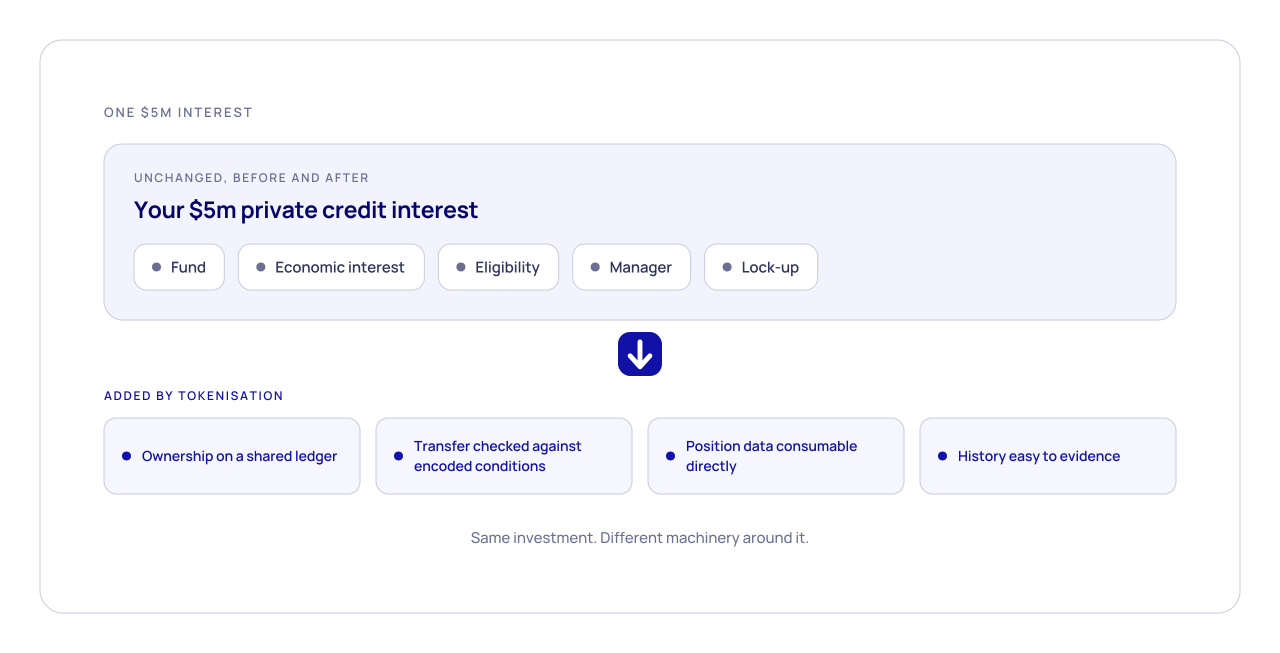
These are the same before and after: the fund, your economic interest, your eligibility, the manager, the lock-up.
These are new: your ownership is represented on a shared ledger; a transfer can be checked against encoded conditions; your position data can be consumed directly; the transaction history is easier to evidence.
The investment did not become a different investment. The machinery around your investment did.
Three Levels, and Why They Get Blurred
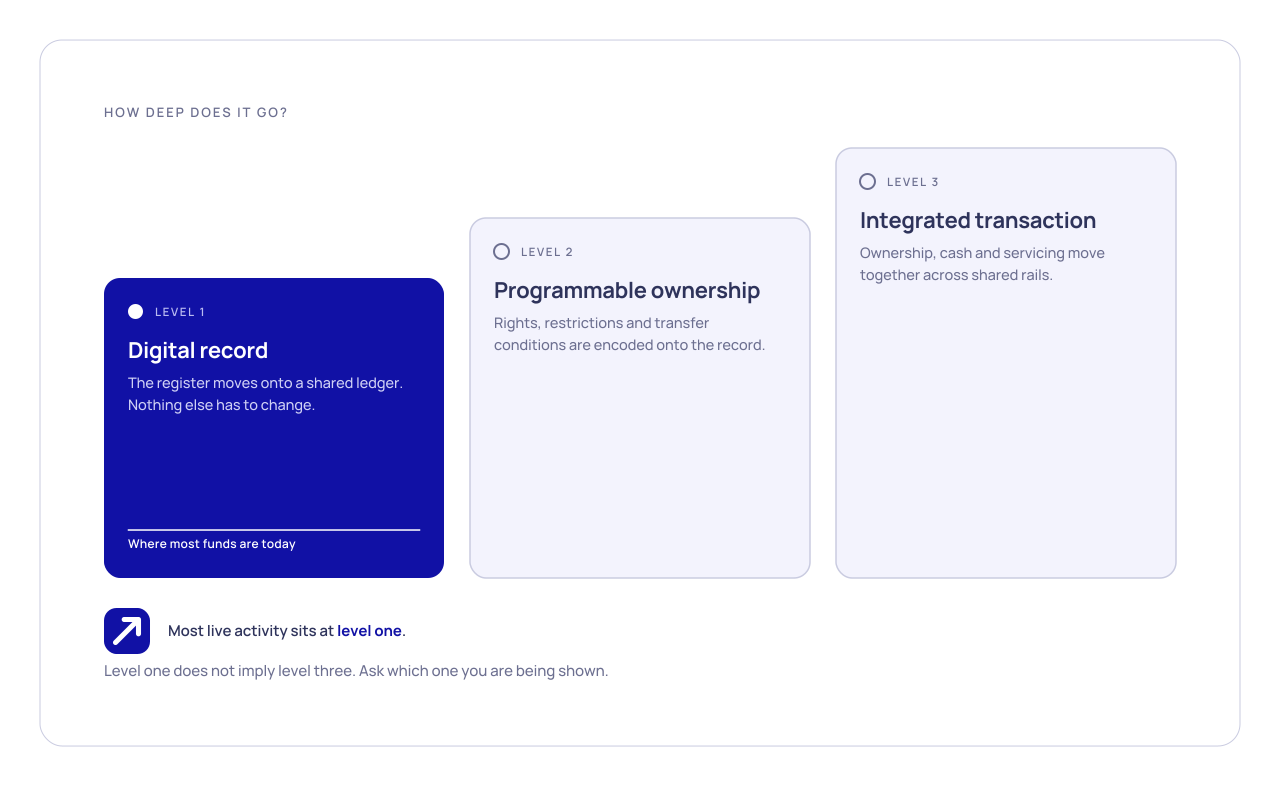
Not all tokenisation is the same depth and it helps to consider it across three different levels.
Level one, a digital record. The register moves onto a shared ledger. Ownership is recorded differently. Nothing else has to change.
Level two, programmable ownership. Rights, restrictions and transfer conditions can be encoded, so the record does more than sit there.
Level three, integrated transaction. Ownership, cash and servicing interact across shared rails, so a transfer, its payment and its downstream updates can move together.
Here is the trap. A pitch demonstrates level one and describes level three. Do not assume the second because someone showed you the first. Most live activity today sits at level one, and the value at each level is different.
Five Questions for When You Do Receive the Pitch
When it arrives, you do not need to understand the stack or its pieces. You need five questions:
- What changes about my claim, and what only changes about the record? If the answer touches your entitlement, your rights or your protections, look closer. If it touches only the form and location of the record, that is the honest version.
- What does this change without a market? Strip out anything that needs buyers who are not there yet. What is left is the part you can rely on today.
- What is authoritative when the records disagree? Something has to be the version that wins. If the answer is unclear, the token has not fixed the problem you started with.
- Who is accountable when it breaks? Encoding a rule enforces it. It does not write the rule, and it does not replace the person who maintains the approved list and corrects an error. A record no one owns is a risk, not a feature.
- What can I do now that I could not do before? If the answer is "you own the same thing, on a ledger", you have learned something. If it is "you can transfer through an approved process, receive structured data, settle differently, or act on the position programmatically", there is a real functional gain. Either way, you now know which.
So What Do You Do
"From fund units to digital assets" is a genuine direction. It is also more incremental than most people in this space makes it sound. Your record is moving onto shared infrastructure, in stages, over years, while your claim, your manager and your judgement stay where they are.
So when a manager pitches you a digital asset, five things:
- Know what you already own. The economic and legal interest is the thing that matters.
- Identify what has changed. Usually the record, and what can be done with it, not the investment.
- Separate new functionality from new economics. A better transfer process is not a better return.
- Ask what you get today. Not what a mature tokenised market might offer later.
- Do not confuse tokenisation with liquidity. The two are unrelated until a market exists.
Do that and you are reading the pitch as an allocator, not as a technology buyer.
For managers, this is the harder job underneath: representing ownership in a form the next generation of fund operations can run on. That is the problem Tranche:os is built around.